
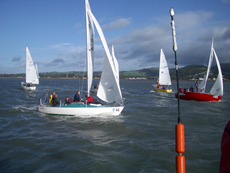
Carlingford Lough is a glacial fjord or sea inlet that forms part of the international border between Northern Ireland to the north and the Republic of Ireland to the south. At its extreme interior angle (the northwest corner) it is fed by the Newry River and the Newry Canal, which link it to the nearby city of Newry. The only other known glacial fjords in Ireland are Lough Swilly and Killary Harbour.
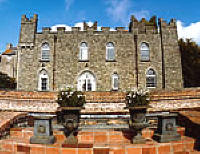
Knockabbey Castle and Gardens Tallanstown, Co Louth reflect the constantly changing fortunes of its owners for more than six centuries. The numerous additions and changes evident in the castle and gardens are like different chapters in a book; all telling different stories about different periods and people. When it was first built in 1399, it was called Thomastown Castle and consisted only of a simple square building; the tower house where the interpretative centre is now housed. This structure offered its owners, the Bellews, comfort and security at a time when skirmishes between the native Irish and the New English and Norman settlers were quite common.
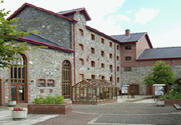
County Museum Dundalk - The Carroll Centre, Jocelyn Street, Dundalk, Co Louth. Louth County Museum chronicles the historical development of County Louth from the Stone Age up to the present, the Museum through a combination of artefacts and computer aids presents this story over three galleries of permanent exhibition. These exhibits include the fabled Mell flake, a piece of flint made by human hands and transported here in gravel via an ice sheet, it is the earliest artefact to have been found in Ireland. Another interesting feature of the collection is the memorial garden located in the Museum courtyard dedicated to botanist and explorer, Thomas Coulter.

The Monasterboice Monastery which was founded by Saint Buite, who died in 521 AD, contains two of the finest High Crosses in Ireland, both of these Crosses are made of sandstone and date to around the 9th century. The site also has a round tower, which is in excellent condition.
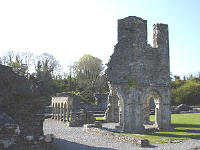
Old Mellifont Abbey Collon in Louth was founded in 1142 and sits on the banks of the River Mattock, some ten km (6 miles) north-west of Drogheda. It was the first Cistercian abbey to be built in Ireland. By 1170, Mellifont had one hundred monks and three hundred lay brothers. The Abbey became the model for other Cistercian abbeys built in Ireland, with its formal style of architecture imported from the abbeys of the same order in France.
Killineer House and Gardens, Co Louth
Knockabbey Castle & Gardens, Co Louth
Rokeby Hall, Co Louth
Hamwood, Co Louth
Highlanes Gallery, Co Louth
St Laurence Gate, Co Louth
St Peter's Catholic Church & St Oliver Plunkett's Shrine, Co Louth

Are you planning on renting a car in Ireland? We will compare the best car hire companies to get you the best price and overall deal. One way Car Rental is available. Rent a car at Dublin Airport, Cork Airport, Shannon Airport, Kerry Airport or Belfast, we give you an all inclusive quote.
With free cancellation and no credit card fees you have nothing to loose.
 Best B&BS in Louth
 Best Hotels in Louth
 Beaches
 Castles & Heritage
 Louth Golf Courses
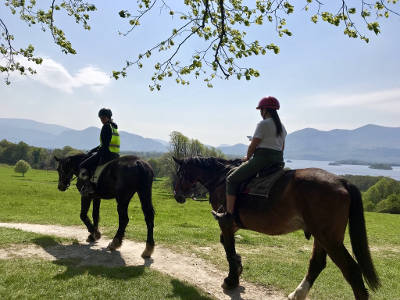 Horse Riding
 Louth Parks & Gardens
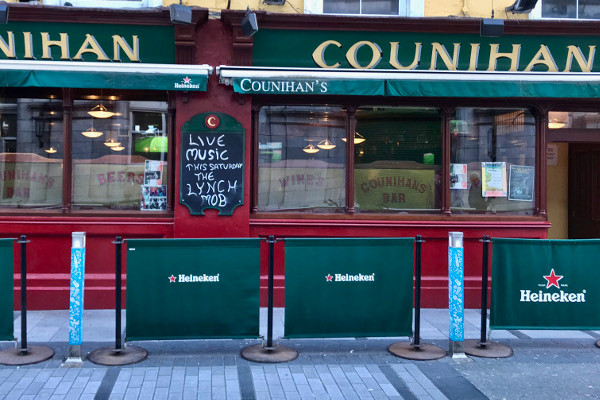 Pubs
Pubs Louth Restaurants
 Visitor Attractions
 Walks
Walks
 Car Hire
 Bus & Coach
 Ferry to Ireland
 Irish Airports
 Taxi
Taxi Trains